For an advanced lifter, the "best" body composition test depends entirely on what you are trying to do. If you need a precise, comprehensive baseline — including bone density and regional fat distribution — dual-energy X-ray absorptiometry (DEXA) is the strongest option, with providers reporting a margin of error around 1–2%. If you want good accuracy for tracking changes over time at moderate cost and effort, the Bod Pod's air displacement method offers roughly 2–3% error. And if your priority is frequent, convenient trend monitoring, bioelectrical impedance analysis (BIA) is the most accessible route, though its error margin widens to roughly 3–5% or more in real-world conditions, and a single glass of water can shift the reading.
No single method wins on every dimension. The practical trade-off is straightforward: as accuracy and data detail increase, so do cost, time, and the need to control measurement conditions. This guide compares the three methods on their measurement principles, reported accuracy, data outputs, and the protocols required to make tracking meaningful — and it deliberately does not cover hydrostatic weighing or skinfold calipers in detail. Prices vary by location and provider, so costs are discussed in general terms rather than fixed figures.
DEXA: The Gold Standard for Detailed Analysis
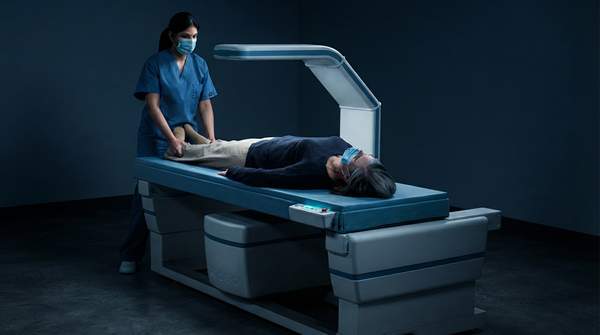
DEXA stands apart from the other two methods in the scope of what it measures. According to the comparison published by Desert Dexa, a DEXA scan measures fat, lean mass, and bone, and provides a regional breakdown along with visceral fat — an estimate of the fat surrounding internal organs — with a reported 1–2% margin of error and a session lasting about 15 minutes. Body Fat USA's independent comparison echoes the same accuracy band, citing DEXA at ±1–2% in a table that also confirms the scan captures bone density and regional distribution while remaining unaffected by hydration.
The scientific literature supports this positioning. A comparative study published on PMC notes that DEXA, along with CT and MRI, "have advantages in measurement accuracy," while also acknowledging that these methods come with practical and economic problems, including expensive equipment that requires highly skilled personnel. In other words, the accuracy is real, but so is the infrastructure behind it.
For lifters, the value of that detail is concrete. Desert Dexa describes DEXA as "the only method that gives you a full picture — fat distribution, muscle mass by region, visceral fat, and bone health — in a single scan." That regional data is what makes DEXA useful for establishing a baseline: you can see, for example, whether changes in lean mass are concentrated in the limbs or trunk, something neither the Bod Pod nor BIA can tell you. The same provider cautions that DEXA results should be interpreted alongside your clinical history, and that the article is general information rather than medical advice — a caveat worth taking seriously.
The trade-off is cost and access. DEXA requires dedicated clinical equipment and trained operators, so scans are typically booked through clinics rather than gyms, at a higher per-session price than the alternatives. If your goal is a one-time or infrequent, highly detailed snapshot — say, once or twice a year — that cost buys the most detailed and most consistent picture available among the three methods.