The single most useful clue for choosing between the sumo and conventional deadlift is your torso-to-height ratio. A peer-reviewed study of anthropometrical determinants of deadlift performance found that "individuals with greater torso to total height ratios had higher 1 repetition maximums when the deadlift was performed with the sumo compared to conventional styles." In other words, if you carry a relatively long torso for your height, the wide sumo stance is statistically more likely to be your stronger pull. If your build leans the other way, the conventional deadlift's demands may suit you better. Here is how the biomechanics work and how to apply them to your own body.
Understanding Deadlift Biomechanics: Sumo vs. Conventional
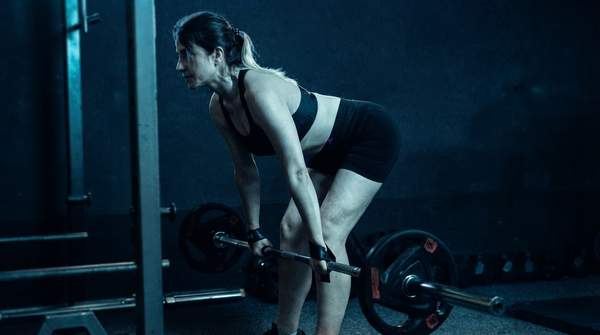
Both lifts move a bar from the floor to a standing position, but they get there through different geometry. The conventional deadlift uses a narrow stance with hands outside the legs, which tilts the torso further forward over the bar. The sumo deadlift uses a wide stance with hands inside the legs, which opens the hips and lets the torso sit more upright. A biomechanical analysis comparing the two techniques concluded that they have "distinct biomechanical characteristics," with the conventional pull producing greater posterior chain involvement through increased hip extension demands and higher activation of the biceps femoris and thoracic erector spinae. Those differences in lean angle and joint loading are exactly why your proportions matter more for this lift than for almost any other barbell exercise.
Core Biomechanical Differences: Muscle Activation and Joint Demands
The two stances divide the work differently across your muscles and joints. The conventional deadlift loads the posterior chain—spinal erectors, glutes, and hamstrings—more heavily, because the forward torso lean lengthens the moment arm the back muscles must overcome. The sumo stance shifts work toward the quadriceps and hip adductors and demands more from the knee extensors, while the more upright trunk reduces the lean your spinal extensors have to fight. One analysis notes the conventional deadlift requires roughly 5% to 10% greater torso lean than the sumo, and that greater lean increases the spinal flexor moment arm, making it harder to hold a neutral spine under load.
Greg Nuckols, writing for Stronger by Science, frames the practical trade-off simply: conventional pulls are a little easier on your quads, and sumo pulls are a little easier on your back, while hip extension demands are nearly identical between the two. Neither stance is inherently easier; they reward different strengths.
The Role of Anthropometry: How Your Body is Built
Anthropometry is the study of body segment proportions—torso length relative to height, limb lengths relative to each other—and it changes your leverage in each stance. The research here is still developing: the same anthropometry study noted that "little is known about how differences in limb lengths and ratios effect performance between the two lifts," even while reporting the torso-to-height finding above. Nuckols argues that hip structure affects strength and comfort in each stance much more than height or limb lengths do, and separately observes that sumo performance varies more between lifters because the wide stance is more sensitive to individual differences in range of motion and leverage.
That sensitivity cuts both ways: sumo disproportionately rewards lifters whose proportions suit it, while conventional performance is more uniform across builds. The takeaway is that anthropometry is not destiny, but it is a reliable starting hypothesis.
Conventional Deadlift: Best Suited For...
The conventional stance favors lifters who can keep their hips high and their torso closer to vertical despite the narrow stance—typically people with relatively shorter torsos and longer arms, which shorten the distance the bar must travel and reduce the hip moment arm. Physical therapist writing at The Barbell Physio describes how lifters with certain proportions set up with hips lower in a more squat-like position to keep a more upright torso and effectively "shorten" their trunk, and emphasizes that all of this concerns relative limb lengths, not absolute height.
The cost of the conventional pull is back demand: the larger lumbar moment arm and higher trunk extension moment drive greater erector spinae activation, a consistent finding across biomechanical analyses, including Escamilla's three-dimensional comparison of the two styles. If your lower back is your limiting factor or your torso is long for your height, this stance asks more of the structure that is already working hardest.
Sumo Deadlift: Best Suited For...
The sumo stance suits lifters whose proportions let them exploit its wide-stance geometry—most notably, the longer-torso-for-height build identified in the anthropometry study, where the correlation appeared specifically in one-rep max performance. The mechanism is inferred from moment arm principles rather than directly measured: the wide stance allows a more upright torso, which shortens the hip and lumbar moment arms and reduces the leverage disadvantage a long torso creates in the conventional pull. The trade-off is that sumo demands more from the quadriceps and hip adductors, and it requires the hip mobility to open wide at the bottom.
Nuckols's observation that sumo performance varies more between individuals means you should test it rather than assume it: if your leverages fit, the payoff can be large; if they don't, the lift can feel awkward and weak no matter how much you practice it.
Decision Framework: Choosing Your Optimal Deadlift Stance
Use this matrix to match your proportions and strengths to a starting stance. Read your body type down the left side, then weigh the biomechanical demands each style places on you.
| Dimension | Sumo Deadlift | Conventional Deadlift |
|---|---|---|
| Primary muscle activation | Greater quadriceps and hip adductor involvement, relative to conventional | Greater posterior chain emphasis—erector spinae, glutes, biceps femoris—relative to sumo |
| Joint demands | Larger knee extensor moment; more upright torso, which reduces hip and lumbar moment arms compared to conventional | Larger lumbar spine moment arm and higher trunk extension moment, increasing erector spinae activation |
| Anthropometric advantage | Greater torso-to-total-height ratio; this correlation was observed in 1-rep max performance | Longer arms and a relatively shorter torso, which reduce range of motion and the hip moment arm, allowing a more upright torso and less work for the back |
| Range of motion sensitivity | Performance varies more between lifters; the stance is more sensitive to individual leverages | Performance is more uniform across different builds |
| Prioritize if... | You have a long torso for your height, strong quads, and the hip mobility for a wide stance | You have a shorter torso with longer arms, a strong posterior chain, and a healthy, resilient lower back |
Two cautions apply. The torso-to-height finding is a correlation observed in studies, not a guaranteed mechanism, and hip structure—which Nuckols argues matters more than limb lengths—can override it. Treat the matrix as a hypothesis to test, not a prescription.
Making Your Choice and Observing Progress
Lifters should experiment with both sumo and conventional deadlifts, using their anthropometric profile as a guide, and observe which stance allows for greater strength and comfort while minimizing perceived injury risk. Run both stances for a training block each, keeping form quality constant, and let the numbers decide. This is not medical advice, and a history of back or hip injury should weigh more than any proportion ratio—a qualified coach can assess what a general framework cannot. The measurable indicator is simple: consistent improvement in 1-rep max or rep performance with good form, and the absence of new or increased discomfort in the lower back or hips. If one stance moves that needle and the other doesn't, your body has already cast its vote.