
Elena Pappas
Editorial byline
Elena Pappas is an editorial byline for No Bad Reps, with a focus on Hypertrophy Hub, Strength & Conditioning, Training Programs. Biographical credentials and external profiles are published only after verification.
Learn more about our editorial process and use of automation in our AI & Automation disclosure.
Coverage Areas
Latest Articles

How to Program for Your Muscle Fiber Types: Matching Load, Reps, and Style to Strength or Size
Tailor your training to your specific muscle fiber types to optimize for maximal strength or hypertrophy. Understand how Type I, IIa, and IIx fibers respond to different loads, repetition ranges, and training styles to program effectively.
Nov 21, 2026 · 4 min read

Bench Press Grip Width: The Measured Trade-Off Between Shoulder Stress and Triceps Emphasis
Bench press grip width involves a measured trade-off between shoulder stress and triceps emphasis. This article provides a diagnostic framework to adjust your grip based on pain, muscle weakness, or specific training goals.
Nov 21, 2026 · 6 min read

Hip Hinge Faults Decoded: Match the Error You See to the Cause Behind It
A correct hip hinge sends the overwhelming majority of lifting forces through your hips and legs while your spine stays neutral and loaded in compression. This guide connects each observable fault to its underlying biomechanical cause, so you can fix the mechanism rather than just repeating cues.
Nov 19, 2026 · 5 min read

Are You Making These 5 Athlete Development Mistakes? Train Fuel Find Doesn't
The path from a dedicated young athlete to a successful collegiate competitor is filled with potential missteps. For parents, coaches, and the athletes themselves, avoiding common athlete development mistakes is crucial …
Sponsored by Train Fuel Find · Nov 18, 2026 · 6 min read

Hpike-Free Gains: How Testosterone, Estrogen, and Growth Hormone Actually Protect Strength as You Age
Maintaining strength as you age relies more on consistent baseline levels of testosterone, estrogen, and growth hormone than acute training spikes. Lifestyle strategies like nutrition, exercise, sleep, and stress management significantly support these vital hormones, with medical consultation reserved for diagnosed deficiencies.
Nov 18, 2026 · 6 min read

When Recruitment Isn't Enough: How Advanced Lifters Use Firing Rate to Break Strength Plateaus
Advanced lifters often plateau because they've maximized motor unit recruitment. Breaking through requires focusing on increasing motor unit firing rates, a key neural adaptation for continued strength gains.
Nov 17, 2026 · 5 min read

Beyond mTOR: How IGF-1/Akt, MAPK, and β2-Adrenergic Signaling Shape Muscle Growth
Muscle growth is regulated by a complex network of signaling pathways, including IGF-1/Akt, MAPK, and β2-adrenergic signaling, not solely by mTORC1. Understanding this interplay allows for more effective training and nutrition strategies beyond optimizing a single pathway.
Nov 16, 2026 · 5 min read

Why Strength Fades Faster Than Muscle With Age—and How to Train and Eat Against It
Muscle strength (dynapenia) declines faster than muscle mass (sarcopenia) with age due to distinct physiological mechanisms. This guide outlines evidence-based resistance training and nutritional strategies to slow both processes and maintain muscle longevity.
Nov 15, 2026 · 6 min read

After 40, Train More Often or Lift More Volume? A Decision Framework for Masters Lifters
Masters lifters over 40 face a choice: prioritize higher training frequency for strength gains or moderate frequency with varied volume for hypertrophy. This article provides a decision framework to help optimize training based on individual goals and age-related recovery considerations.
Nov 14, 2026 · 5 min read

Beyond Adding Weight: How Advanced Lifters Keep Progressing Without Wrecking Their Joints
For advanced lifters, simply adding weight to the bar is no longer a viable progression strategy. Mastering progressive overload involves utilizing multiple levers beyond load, such as exercise rotation, fluctuating training stress, and prioritizing recovery and movement quality for long-term strength gains and joint health.
Nov 13, 2026 · 4 min read

Barbell vs. Dumbbell vs. Kettlebell Overhead Press: Which Variation Fits Your Goal?
Choosing the right overhead press variation—barbell, dumbbell, or kettlebell—depends on your specific training goals. Each implement offers unique benefits for strength, hypertrophy, and stability.
Nov 11, 2026 · 5 min read

mTOR vs. AMPK: How to Manipulate Load, Volume, and Rest to Bias Your Training Toward Muscle Growth
Muscle growth is driven by the mTOR pathway, while AMPK signals energy stress and inhibits growth. Advanced lifters can optimize hypertrophy by strategically manipulating training variables like load, volume, and rest to favor mTOR activation.
Nov 10, 2026 · 5 min read
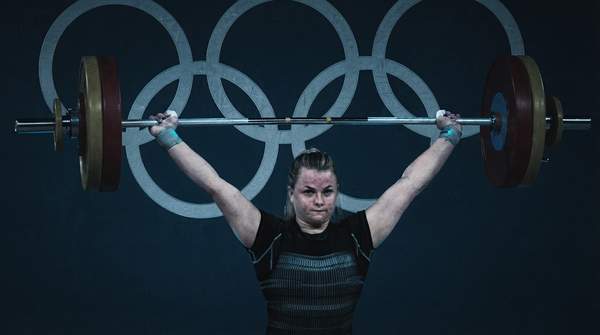
Training for Muscle Fiber Types: What the Evidence Actually Supports
While training can influence muscle fiber adaptations, precise targeting for hypertrophy is debated and evidence is limited. Understanding how load and effort recruit different fiber types helps align training with goals like strength, power, or endurance.
Nov 9, 2026 · 5 min read

Retained Myonuclei: The Cellular Engine Behind Muscle Memory and Faster Regrowth
The leading explanation for muscle memory is the myonuclear permanence hypothesis: resistance training adds nuclei to muscle fibers via satellite cells, and these nuclei are thought to be retained during detraining, priming muscle for faster regrowth upon retraining. While this cellular mechanism is actively investigated, evidence in humans remains mixed.
Nov 9, 2026 · 5 min read

Which Squat Variation Fixes Your Weak Point: Front Squat, Safety Bar, or Pause Squat?
Improve your back squat by identifying specific weaknesses and choosing the right variation. Learn how front squats, safety bar squats, and pause squats target distinct failure points to enhance your overall lift.
Nov 8, 2026 · 7 min read

Why Your Tendons Lag Behind Your Muscles—and How to Program for It
Muscles adapt much faster than tendons, creating a strength-capacity mismatch that often leads to overuse injuries like tendinopathy. Learn how to program your training to build resilient tendons by respecting their slower adaptation timeline.
Nov 8, 2026 · 4 min read

Best Training Split for Advanced Hypertrophy: How to Choose Between Upper/Lower, PPL, and High-Frequency Options
Advanced lifters require training splits that hit major muscle groups 2-3 times per week with 18-25+ weekly sets, balancing frequency, volume, and recovery. The 4-day Upper/Lower split suits moderate schedules, while the 6-day Push-Pull-Legs split is for those with high recovery capacity.
Nov 6, 2026 · 5 min read

Conventional Deadlift vs. Romanian Deadlift: Which One Fits Your Goal?
Understand the key biomechanical differences between the conventional deadlift and the Romanian deadlift (RDL) to select the best exercise for your specific training goals, from maximal strength to targeted muscle hypertrophy.
Nov 6, 2026 · 3 min read

Sumo or Conventional Deadlift? Your Body Proportions Point to the Answer
Your body proportions, particularly your torso-to-height ratio, are the most significant factor in determining whether the sumo or conventional deadlift will be your stronger stance. Understanding biomechanics and anthropometry helps you choose the optimal deadlift style for your build.
Nov 1, 2026 · 5 min read

Which Deadlift Variation Fixes Your Weak Point? A Diagnostic Guide for Advanced Lifters
Diagnose your deadlift sticking points and muscle weaknesses. This guide helps advanced lifters select the optimal deadlift variation—deficit, block pull, RDL, or trap bar—to target and overcome specific limitations.
Nov 1, 2026 · 6 min read