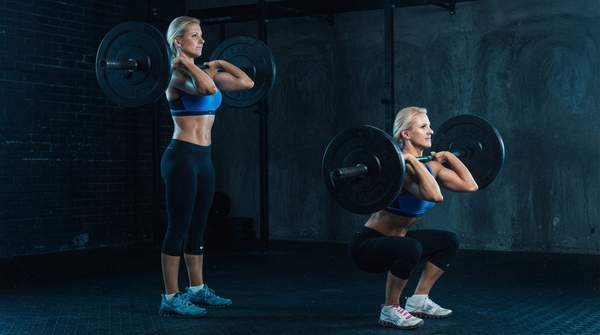
If your back squat stalls in the hole, collapses through the upper back, or simply cannot stay upright, the fix is usually not more back squats. It is a targeted variation whose mechanics overload the exact position you keep losing. The three most useful options each attack a different failure point: the front squat loads the front of your body and punishes a collapsing torso, the safety bar squat places a cambered load in front of your spine and forces your entire back to fight it, and the pause squat removes the stretch reflex so you must generate force from a dead stop. Here is how to choose between them, and how to slot the winner into your training.
Understanding Your Back Squat Weak Points
Before picking a variation, name the failure precisely. Broadly, back squat breakdowns fall into three categories: a torso that pitches forward or an upper back that rounds under load, a bottom position where you cannot initiate the ascent without bouncing, and legs that simply cannot produce enough force through the mid-range. Each category has a matching assistance lift, and the match matters more than the effort you put in.
Chad Wesley Smith, writing for JuggernautAI, frames the decision exactly this way for competitive and intermediate-to-advanced squatters: pick the variation that addresses the specific error in your competition lift, then deploy it in the training block where it fits. His guidance for the safety bar squat, for example, is explicitly aimed at lifters who "round over" under heavy weights — a technique point that a general back squat volume increase will not solve on its own.