The best mobility tool for a lifter is the one whose mechanism matches the specific problem, not the most expensive gadget in the gym bag. A foam roller, a lacrosse ball, a floss band, a resistance band, and a percussion massage gun all work differently: broad pressure, pinpoint pressure, joint compression, active stretching, and targeted percussion. Choosing by mechanism turns "I need to fix my mobility" into a concrete, targeted selection that saves money and time.
This guide compares the five most consistently recommended tool types for lifters, profiled by mechanism, target areas, and portability, then pulls them into a decision framework that starts from your limitation—general soreness, a specific knot, a stiff joint, or a restricted end range. It covers tool categories, not brands or models, and it is not medical advice; persistent pain or injury warrants a healthcare professional. Individual results vary and technique matters for both safety and effectiveness.
Understanding Mobility Tool Mechanisms
Most of these tools fall under the umbrella of self-myofascial release (SMR): mobility work that uses a tool to release restricted muscle tissue and knots, as yoga instructor Dean Pohlman explains in his guide to recovery tools. But SMR is only one family of mechanism. Keersa's editorial team, writing in 2026, sorts useful tools by the "real job" they perform: "broad soft-tissue work, pinpoint pressure, active end-range stretching, or travel-friendly recovery."
That job-based framing is what makes a comparison useful for lifters. A restricted squat depth, a knotted shoulder before a press, and a generally sore back after heavy pulls are different problems, and no single tool addresses all three equally. The evidence below describes each tool's function individually; the synthesis—that different mechanisms suit different problems—is assembled from those descriptions rather than stated as a direct comparison by any single source.
Foam Rollers: Broad Myofascial Release
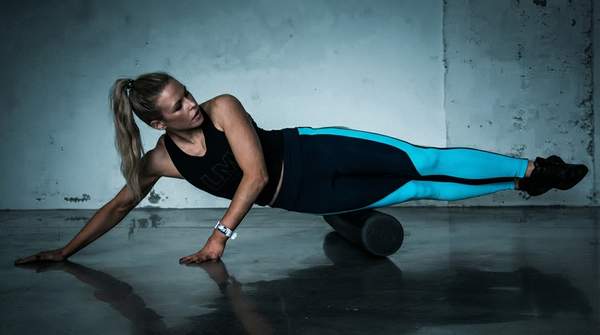
The foam roller is the generalist. It uses broad pressure and your own body weight to release large muscle groups like the quads, IT band, and back, which makes it ideal for general myofascial release and warm-up routines, according to the team at Products For Our Lives. Keersa's editors likewise note that rollers "cover large areas cheaply and sit closest to the self-myofascial-release evidence base."
For a lifter, that means the roller is your tool when the whole muscle group feels beaten up after heavy squats or deadlifts, not when one specific spot is causing trouble. Its weakness follows directly from its mechanism: the broad contact surface cannot isolate a deep knot the way a smaller tool can. Its strength is cost and simplicity—a roller is cheap, requires no batteries or technique tutorials, and covers a lot of tissue in a few passes. It is bulkier than a ball or band, so it lives in the gym bag rather than the carry-on.