If your goal is optimizing recovery and readiness, sensor-based wearables are the right category. If your goal is improving lifting technique and tracking bar velocity, AI-driven video analysis is the stronger choice. That is the core trade-off, and it exists because these two technologies measure fundamentally different things: your body's internal state versus your external movement. No single technology currently excels at both.
Understanding Advanced Strength Training Monitoring
Advanced monitoring for strength athletes falls into two categories. The first is sensor-based wearables—devices defined by researchers Dhruv Seshadri and colleagues at Case Western Reserve and University Hospitals, writing in npj Digital Medicine, as "a sensor or sensor suite unencumbered by wires for the continuous and non-invasive detection of biosignals, analytes, or biomechanical and impact forces." The second is AI-driven video analysis, which uses computer vision to examine footage of your lifts and produce feedback on movement execution.
The gap between them matters for lifters specifically. A technology-focused comparison from CueForm notes that AI platforms are best for refining technique and reducing injury risk, while wearables are better for tracking recovery and physiological data. Meanwhile, Harvard's Wyss Institute, describing the problem its startup WurQ set out to solve, observes that existing wearable devices "are generally limited to tracking cardiovascular activities and heart-related data" and that there is currently no readily accessible product that can track functional and strength training at scale.
Physiological vs. Biomechanical Data: The Core Trade-Off
Physiological data reflects your body's internal state and response to training: heart rate, heart rate variability, sleep patterns, and internal workload. Biomechanical data quantifies external movement: lifting technique, range of motion, bar velocity, and repetition quality. These require different measurement approaches, which is why the technology landscape splits the way it does.
A review of wearable sensors for exercise monitoring published in PMC illustrates the split clearly. Wrist photoplethysmography provides generally accurate heart rate for zone-based training, and standardized HRV reflects autonomic balance and recovery status—but energy-expenditure estimates are unreliable at higher intensities. On the movement side, the same review notes that inertial measurement units provide spatiotemporal gait and running metrics like cadence and stride length, not detailed barbell mechanics. A heart rate monitor cannot fix your squat depth, and a camera cannot measure your sleep quality.
Sensor-Based Wearables: Tracking Your Internal State
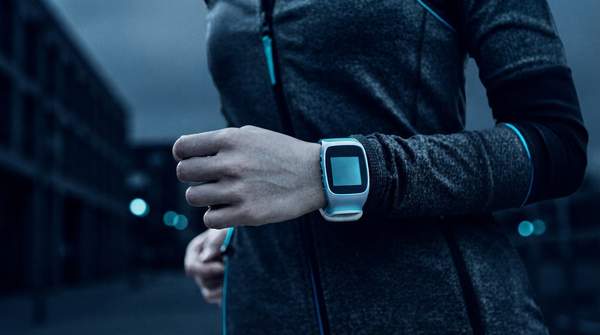
Wearables shine at continuous, non-invasive monitoring of internal responses. A review of wearable technology for resistance training, also published in PMC, explains that heart rate monitors can check recovery progress between sets and workouts, monitoring heart rate both at rest and during exercise. These insights, the review notes, improve intensity regulation, load management, and individualized programming.
Biometric monitoring in sports more broadly, as described by Loyola University Chicago's biometrics lab, includes real-time data on heart rates, sleep patterns, oxygen levels, stress levels, and muscle activity. For strength athletes, the practical value is knowing when to push and when to back off.
The limitation is equally clear. Microsoft Research's Workout project, which used an arm-worn inertial sensor to recognize and count repetitive strength exercises, acknowledged that devices built for running and walking "offer limited functionality for strength-training exercises." And CueForm's comparison reports that wearable velocity tracking is inconsistent at high weights, with rep accuracy varying by exercise.
AI-Driven Video Analysis: Perfecting Your Form and Performance
AI video analysis works in the opposite direction: it watches what your body does, not what it feels. CueForm's comparison credits AI platforms with detailed, real-time form feedback, high rep accuracy, and velocity tracking it describes as accurate for all loads. The same source quotes expert commentary stating that AI-driven tracking systems "use advanced computer vision and AI techniques to thoroughly analyze video or sensor data in order to provide precise and reliable feedback on user performance."
For injury prevention, the mechanism differs from wearables. CueForm reports that AI detects risky movement patterns directly, while wearables rely on fatigue markers as an indirect signal. The Wyss Institute frames the underlying need similarly: athletes often lack a way to quantitatively assess progress or obtain actionable insights that enhance performance or avoid injuries.
The limitation: video analysis tracks no physiological data at all. CueForm's comparison lists physiological data as "none" for AI platforms. It cannot tell you whether you recovered from Tuesday's session.
Decision Framework: Wearables vs. AI Video for Strength Training
The table below contrasts the two technology categories against a consistent set of criteria—what they measure, what they're best for, and where they fall short—so you can match the category to your primary training goal, whether that is technique optimization, injury-risk reduction, or recovery management.
| Criterion | Sensor-Based Wearables | AI-Driven Video Analysis |
|---|---|---|
| What it is | Wireless sensors for continuous, non-invasive detection of biosignals or biomechanical forces | Computer vision and AI analyzing video or sensor data for movement feedback |
| Primary metrics | Heart rate, HRV, sleep, internal workload, recovery between sets | Form, technique, range of motion, bar velocity, rep quality |
| Best for | Recovery management, readiness assessment, intensity and load regulation | Refining technique, reducing injury risk, velocity-based feedback |
| Key limitations | Limited functionality for strength exercises; velocity tracking reported inconsistent at high weights; rep accuracy varies by exercise | No physiological or recovery data; cannot monitor internal state |
Read the table as a decision, not a ranking. If your limiting factor is recovery—poor sleep, accumulating fatigue, uncertain readiness—the left column applies. If your limiting factor is execution—depth, bar path, velocity loss across sets—the right column applies. CueForm's own conclusion is that combining both tools offers the most complete picture, using AI for technique analysis and wearables for cardiovascular intensity and recovery.
Making Your Choice: Aligning Technology with Training Goals
To effectively leverage advanced technology in strength training, choose between sensor-based wearables and AI-driven video analysis based on whether your primary goal is monitoring internal physiological states for recovery and readiness, or external biomechanical performance for technique and velocity optimization. This article compares technology categories, not specific brands; accuracy claims reflect the cited sources, not independent testing, and none of this constitutes medical advice.
The measurable indicator of a good choice: the athlete observes improved training outcomes—better recovery, fewer injuries, enhanced lifting technique—directly attributable to insights gained from their chosen technology type. Pick the category that matches your current bottleneck, track that outcome over your next training block, and only then consider adding the other.
Sources
- Wearable sensors for monitoring the internal and external workload of the athlete - npj Digital Medicine — Nature
- AI vs. Wearables: Best for Strength Training Metrics? — Cueform
- Wearable Sensors for Movement Tracking — Wyss Institute
- Wearable Sensors for Precise Exercise Monitoring and Analysis - PMC
- Monitoring Resistance Training in Real Time with Wearable Technology: Current Applications and Future Directions - PMC
- Biometrics in Sports: Revolutionizing Athletic Performance and Player Safety: Loyola University Chicago
- Workout: Using a Wearable Sensor to Find, Recognize, and Count Repetitive Exercises - Microsoft Research