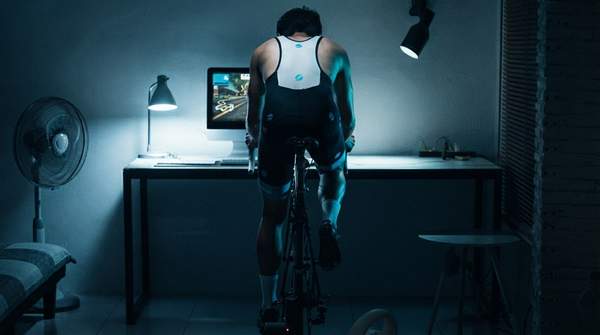
The best home gym lighting isn't one bright fixture in the middle of the ceiling—it's a layered plan that combines overhead, task, and ambient light so the same room can serve an intense lifting session and a quiet recovery stretch. Lighting manufacturers Philips Hue, Hyperlite, and Govee converge on the same core advice: distribute brightness evenly to eliminate shadows, control color temperature to match the activity, and layer multiple fixture types so your space can shift moods on demand. Here's how to translate those principles into a concrete plan for your workouts.
Why Effective Home Gym Lighting Matters
Lighting in a workout space does more than let you see. Hyperlite's setup guide, written by Richard Miller, argues that the quality of illumination directly affects your energy levels, safety, and psychological readiness for a workout. Strength training makes the stakes concrete: when lifting heavy weights, bright light is essential to clearly see your form in the mirror and navigate around equipment without tripping.
Poor lighting isn't just dim—it's uneven. Common problems reported by Govee's editorial team include uneven brightness, flickering from outdated fluorescent lamps, harsh glare, and shadows around equipment. A single fixture rarely provides sufficient illumination for an entire workout space, according to Philips Hue's guidance, and the shadows it leaves can affect your form or create safety hazards. The solution is distributing light evenly across the room and then adding layers you can adjust per activity.
Key Lighting Terms for Your Home Gym
Three specifications do most of the work when you're comparing fixtures, and knowing them lets you read any product label with confidence.
Lumens measure brightness. Getting lumen output right is crucial for safety and performance, per Philips Hue's guide, and total output should be spread across multiple fixtures rather than concentrated in one. Kelvin (K) measures color temperature—how warm or cool the light appears—and, as Philips Hue puts it, it "dramatically affects how your space feels." For a home gym, look for bulbs offering a range of 2200K to 6500K so you can span the full spectrum of workout moods. Cooler temperatures of 5000–6500K mimic natural daylight and help you feel alert and energized, which Philips Hue calls perfect for cardio and strength training. Warmer temperatures of 2200–3000K create a relaxing atmosphere ideal for stretching, yoga, and cool-down sessions.
Color Rendering Index (CRI) measures how accurately a light renders colors, and Hyperlite's guide flags it as important to understand when prioritizing high lumen output in strength zones. One more practical number: Govee notes most LED gym lights last between 30,000 and 50,000 hours, with some high-quality fixtures reaching up to 100,000 hours, and Philips Hue cites 25,000+ hour lifespans for quality smart lighting—so the fixtures you choose are a long-term investment.
Designing a Layered Lighting Plan
Layering is the organizing principle that turns individual fixtures into a system. The three layers serve distinct jobs: overhead lighting provides the room's base illumination, task lighting focuses on specific zones or equipment, and ambient lighting sets atmosphere. Hyperlite's guide frames the payoff clearly: with a layered design, you can "transition the space from a high-intensity strength zone to a calm recovery environment."
Fixture types map naturally onto these layers. Govee's editorial team highlights slim LED panel lights that spread light evenly without glare—suited to yoga, pilates, or strength training depending on room size—and track lighting that lets you point light exactly where you need it, whether toward a treadmill, mirror, or weight section. Linear LED fixtures arranged in rows or patterns deliver even brightness across training zones without harsh glare, while RGB or color-changing accent lighting can build energy during high-intensity sessions.
Dimming capability is what makes the layers work together. Philips Hue notes that LED bulbs enable dimming and color temperature adjustment, which the company calls essential for multi-functional gyms. Hyperlite's guide adds that dimmable layers support post-workout recovery and that scene controllers allow fast transitions between workout modes.
Home Gym Lighting Decision Framework
Use this matrix to plan your layers. It maps each workout type to the lighting characteristics that matter and the fixture types that deliver them, so you can assemble a complete system rather than buying fixtures one at a time.
| Workout Type | Lighting Layer | Key Characteristic | Recommendation |
|---|---|---|---|
| Strength Training | Overhead | High brightness, evenly distributed to eliminate shadows near racks and benches | LED panels, linear fixtures, or high bays depending on ceiling height; cool tones (5000–6500K) for alertness |
| Strength Training | Task | Focused light on equipment or mirrors for form visibility and safety | Track lighting or adjustable spotlights aimed at the mirror and weight section |
| Strength Training | Ambient | Atmosphere rather than primary illumination | Color-changing accent strips for motivation—optional for this activity |
| Cardio | Overhead | Bright, consistent illumination to sustain energy | Even, glare-free LED panels or linear fixtures; cool to daylight tones |
| Cardio | Task | Glare-free focus near displays and movement areas | Track lighting positioned to avoid glare during repetitive movement |
| Cardio | Ambient | Energy-building color for HIIT, spin, or dance-style sessions | RGB or RGBIC accent lighting synced to the rhythm of the workout |
| Yoga/Recovery | Overhead | Dimmable, softer output with warm color temperature | Dimmable LED panels set to warm tones (2200–3000K) |
| Yoga/Recovery | Task | Indirect or diffused light; direct harsh task lighting is counterproductive | Frosted lenses and diffusers, or lights positioned to avoid direct glare at the mat |
| Yoga/Recovery | Ambient | Calming, adjustable mood lighting is crucial here | Dimmable LED strips or smart color-changing lights for a relaxation setting |
The reasoning behind the matrix is straightforward: high-intensity activities reward alertness and precise spatial awareness, so they get bright, cool, evenly distributed overhead light plus targeted task lighting for form checks. Recovery activities reward calm, so brightness drops and color shifts warm, with the ambient layer carrying more of the load. Because general lumen guidance varies by room size, ceiling height, and fixture count, treat brightness as a target you confirm in your own space—add fixtures until every corner is evenly lit and no single fixture dominates.
Solving Common Home Gym Lighting Problems
Glare during floor work and yoga. Hyperlite's guide dedicates a section to avoiding direct glare during floor work, and its recommendations are practical: utilize frosted lenses and diffusers, incorporate indirect lighting techniques, and pay attention to positioning lights relative to your mat. Ceiling placement matters too—Govee recommends fixture choices based on ceiling height and room size, and its panel and linear options are described as spreading light evenly without creating harsh glare.
Shadows around equipment. Shadows near racks and benches are among the most common gym lighting problems Govee's team identifies, alongside uneven brightness and flickering from outdated fluorescent lamps. Philips Hue's guidance points to the root cause—a single fixture rarely illuminates an entire space—and the fix: distribute light evenly across multiple sources. Track lighting aimed at your mirror or weight section, as Govee suggests, lets you fill in the shadowed spots your overhead layer misses.
Making transitions fast. Once your layers are in place, the last friction point is switching between them mid-session. Hyperlite recommends scene controllers for fast transitions, and Philips Hue highlights that dimming and color temperature adjustment—enabled by LED technology—are what make a multi-functional gym work. If your space must serve lifting on Monday and yoga on Wednesday, choose fixtures you can dim and re-tune rather than fixed-output bulbs.
Achieving Your Ideal Home Gym Lighting
Design a layered lighting plan by selecting fixtures that provide appropriate brightness, color temperature, and glare control for each workout activity and area. In practice: start with an even, dimmable overhead base of LED panels or linear fixtures; add track or adjustable task lighting for your mirror, rack, and equipment zones; and finish with dimmable ambient strips that can shift warm and low for recovery sessions. Avoid specific brand searches at this stage—match fixture types to the layers above first, then compare products on lumens, Kelvin range, and dimming capability.
The plan is working when you see the measurable indicator: improved workout focus, reduced eye strain during floor exercises, and a motivating atmosphere adaptable to different training moods. If glare still catches your eyes during floor work or shadows still pool around your bench, the framework tells you exactly which layer to adjust next.
Sources
- Smart home gym lighting ideas — Philips Hue
- Gym Lighting Design: How to Light Your Home Gym — Hyperlite LED
- Best Gym Lighting Fixtures and Ideas — US