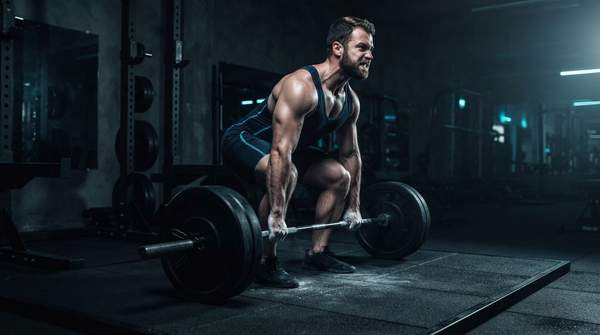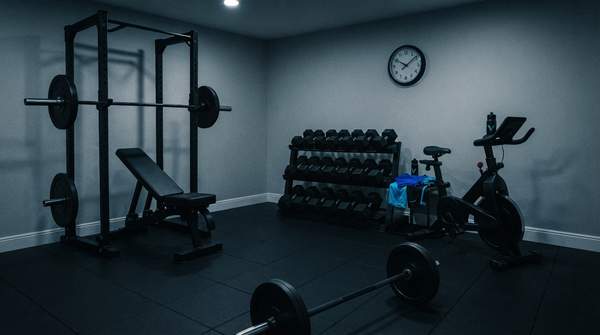
There is no single best weight plate for a home gym — the right choice depends on what you lift, where you lift, and how much you're willing to pay for precision or quiet. For general strength training on a budget, standard iron plates are the cost-effective pick. For competitive powerlifting, calibrated steel plates deliver the tightest weight tolerances and thinnest profiles. For Olympic lifting or any setup where the bar gets dropped, rubber bumper plates protect your floor and your ears. Urethane plates sit at the luxury end: more durable and odorless, but hard to justify for most home lifters. Here's how the four types compare and how to choose.
Calibrated Steel Plates: Precision for Powerlifting
Calibrated plates are the accuracy play. As REP Fitness's buying guide explains, calibrated plates tend to be thinner and have tighter tolerances than other plate types, which allows more plates to be loaded onto a bar. That thinness matters for powerlifters pushing heavy single lifts: a denser, slimmer plate means you can fit more total weight on a standard bar sleeve before running out of space.
How accurate are they in practice? Reported tolerances vary by source and product. Garage Gym Lab's plate review cites competition bumper plates with a tolerance of +/- 15 grams, and vendor claims for "IPF-calibrated" steel plates typically fall in a similar single-digit-to-tens-of-grams range. One caveat worth knowing: official IPF documentation for calibrated steel tolerance isn't directly available in the reporting here, so these figures rest on vendor claims and secondary reviews rather than the federation's own published spec sheet. Still, the consistent picture across sources is that calibrated plates are the most accurate category available to home buyers.
The trade-off is cost and fragility. Calibrated steel plates are not designed to be dropped, and their precision machining commands a premium over basic cast iron. For a competitive powerlifter who needs bar-loading precision and trains in a controlled environment, that premium buys exactly what they need. For everyone else, it's money spent on accuracy they'll never verify.
Bumper Plates: Protecting Floors and Reducing Noise
Bumper plates are rubber plates designed to be dropped. As Strength Shop's equipment guide puts it, the rubber absorbs impact, protects the floor, protects the barbell, and reduces noise. That single sentence explains why bumpers dominate Olympic lifting setups and shared-space home gyms: when a snatch or clean goes wrong, the bar hits the ground safely and quietly.
There's also a functional design reason Olympic lifters need them. Competition-style bumpers share the same 45cm diameter regardless of weight, Strength Shop notes — a 20kg plate is the same outer size as a 5kg plate. That keeps the bar at a consistent height from the floor for pulling movements, which is essential for Olympic lifting and strongly recommended anywhere dropping the bar is part of the session. Cast iron, by contrast, is denser than rubber, so a 20kg iron plate is significantly thinner and smaller than a 20kg bumper.
Not all bumpers are equal, and the differences show up in durability data. Garage Gym Lab highlights bumper designs where the center ring is hooked into the plate to extend life, backed by tiered warranties — for example, four years on plates 35 lb and up, three years on 25 lb plates, and one year on 10–15 lb plates. A low-bounce durometer rating (around 94 on one reviewed competition model) also matters for lifters who want the bar to stay put on impact rather than bounce toward them.