For advanced lifters, the best stretching choice depends on timing and goal: use dynamic stretching before training to prime performance without costing strength, reserve static and PNF stretching for post-workout or separate flexibility sessions, and treat ballistic stretching with caution given its documented injury risk. The reason is straightforward. Static stretching acutely increases range of motion, but research shows it can reduce maximal voluntary strength and power in the hours after a session—precisely what a lifter cannot afford before heavy work. This framework walks through each technique's trade-offs and maps them to two lifter goals: peak performance on training day, and long-term flexibility development.
Understanding the Four Advanced Stretching Techniques
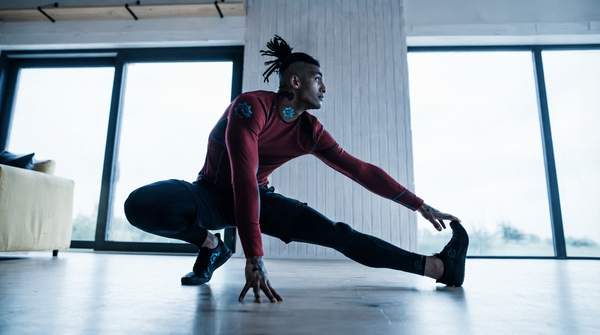
Each modality works differently on the muscle-tendon unit. Static stretching, as Peak Physio's literature review defines it, sustains an end-range position focused on one muscle group at a time, held at the point of maximal stretch for roughly 30 seconds to a minute and repeated three to four times. Dynamic stretching moves a limb through its full range of motion in a controlled, repetitive manner—activating muscle, elevating heart rate, and matching movement patterns to the sport. PNF, or proprioceptive neuromuscular facilitation, combines passive stretching with isometric contractions. Ballistic stretching adds bouncing or pulsing momentum at the end range, pushing a joint beyond where it would normally travel under control.
Acute Performance: Strength and Power Considerations for Lifters
Here the techniques diverge sharply, and this is where lifters should pay closest attention. A growing body of research summarized by the National Strength and Conditioning Association indicates that pre-event static stretching of the prime movers may have a negative effect on force production, power performance, strength endurance, reaction time, and running speed. One study of collegiate track-and-field athletes reported a 3% decrease in 40-meter sprint performance following pre-event static stretching. Peak Physio echoes the mechanism: studies have shown static stretching can reduce maximal voluntary strength, muscle power, and evoked contractile properties after a single session.
Dynamic stretching does the opposite. Hinge Health's clinicians note that dynamic stretches have been shown to enhance performance more significantly than static stretches, a benefit that applies broadly to running, cycling, and resistance work alike—not only to elite athletes. For lifters chasing PRs, that asymmetry is the central practical finding.