
Hana Kim
Editorial byline
Hana Kim is an editorial byline for No Bad Reps, with a focus on Training Theory, Recovery & Mobility, Scientific Research breakdowns. Biographical credentials and external profiles are published only after verification.
Learn more about our editorial process and use of automation in our AI & Automation disclosure.
Coverage Areas
Latest Articles

Why Your First Weeks of Lifting Make You Stronger Without Making You Bigger
Initial strength increases in resistance training are largely due to neural adaptations, not muscle growth. The nervous system learns to activate muscles more efficiently through recruitment, rate coding, synchronization, and reduced antagonist co-activation, leading to faster strength gains before visible size changes.
Nov 20, 2026 · 5 min read

Two Levers of Force: How Motor Unit Recruitment and Firing Rate Build Maximal Strength
Neural drive, the nervous system's command signal to muscles, has two trainable components: motor unit recruitment and firing rate. Advanced lifters can optimize strength gains by training both through heavy loads and maximal intended velocity.
Nov 18, 2026 · 5 min read
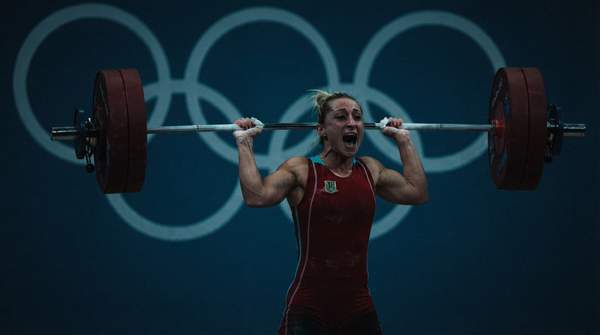
Heavy and Slow: How to Train Tendons That Can Keep Up With Your Muscles
Tendons adapt slower than muscles and require specific training protocols focused on high-magnitude loads sustained for at least 3 seconds per repetition to build resilience and prevent injury.
Nov 18, 2026 · 5 min read

APRE for Advanced Lifters: Principles of Autoregulated Loading
Autoregulatory Progressive Resistance Exercise (APRE) allows advanced lifters to adjust barbell weights session by session based on daily readiness, using a feedback loop from a max-reps set. This method replaces rigid, predetermined plans with real-time load adjustments, optimizing training stimulus and minimizing fatigue.
Nov 15, 2026 · 4 min read

Using the Overhead Squat to Diagnose Your Mobility Limits: A Self-Assessment and Corrective Framework
The overhead squat serves as an efficient full-body movement screen, simultaneously exposing restrictions at the ankles, hips, thoracic spine, and shoulders. This guide details how to perform the self-assessment, interpret observed compensations, and apply corrective exercises to address identified mobility and stability limitations.
Nov 14, 2026 · 5 min read

Fixing Snatch and Clean & Jerk Technique: A Fault-to-Drill Framework for Targeted Practice
Improve your snatch and clean & jerk technique by diagnosing specific faults and using "technique variation complexes" for targeted practice. This method pairs a modified lift with the full lift to ingrain correct patterns through structured, high-repetition training at lighter loads.
Nov 12, 2026 · 5 min read
When to Deload: The Signs That Say It's Time—and the Strength Trade-off You Should Know
Advanced lifters should deload when experiencing consistent signs of fatigue, poor sleep, or performance stagnation, but be aware that a complete week off may impact maximal strength gains while preserving hypertrophy.
Nov 10, 2026 · 5 min read

Before You Buy Recovery Tech: A Three-Tier Framework for Strength Athletes
Strength athletes should prioritize foundational recovery strategies like sleep, nutrition, and training management before investing in advanced modalities. A three-tier framework helps evaluate recovery tools based on evidence strength, cost, and personal goals.
Nov 10, 2026 · 5 min read

Why Your Squat Stalls: The Strength Plateau That Is Really a Coordination Problem
Advanced lifters often stall in compound lifts due to intermuscular coordination issues, not just weak muscles. Training this coordination with submaximal loads and focusing on movement quality can break through plateaus.
Nov 9, 2026 · 5 min read

Foam Roller, Massage Gun, or Massage Ball? Matching Your Recovery Tool to the Goal
Choosing the right myofascial release tool—foam roller, massage gun, or massage ball—depends on your specific recovery goal: broad pressure for general mobility or precise, deep pressure for targeted knots. Each tool offers distinct benefits for lifters seeking to optimize muscle recovery and alleviate pain.
Nov 7, 2026 · 4 min read

Functional Overreaching vs. Non-Functional Overreaching vs. Overtraining Syndrome: A Diagnostic Framework for Advanced Lifters
Advanced lifters can differentiate between functional overreaching, non-functional overreaching, and overtraining syndrome using a diagnostic framework based on performance trajectory, symptom clusters, and recovery time. Understanding your specific fatigue state is crucial for implementing the correct, tailored recovery strategy.
Nov 7, 2026 · 5 min read

Diagnose the Barrier First: A Decision Framework for Fixing Athlete Sleep Problems
Athletes face unique sleep barriers beyond typical hygiene issues, including scheduling conflicts, heavy training, and environmental factors. This article presents a diagnostic framework to identify the specific cause of your sleep problems and guide you toward targeted interventions or professional evaluation.
Nov 5, 2026 · 5 min read

Dynamic Before You Lift, Static or PNF After: Choosing the Right Stretch for the Right Goal
Advanced lifters should use dynamic stretching before workouts to boost performance without sacrificing strength, and reserve static or PNF stretching for post-workout or flexibility sessions to build long-term range of motion. Ballistic stretching is generally not recommended due to its elevated injury risk.
Oct 31, 2026 · 5 min read
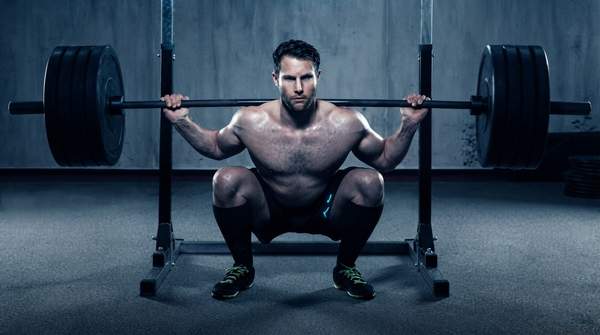
Why Advanced Lifters Move Beyond Linear Periodization: Choosing Between Block and DUP
Advanced lifters often outgrow linear periodization due to slower adaptation and increased recovery demands. The choice then shifts to Block Periodization for focused, sequential development toward a peak, or Daily Undulating Periodization (DUP) for concurrent, flexible training of multiple qualities.
Oct 30, 2026 · 7 min read

Recovering From High-Volume Strength Training: How to Choose Between Active Recovery, BCAAs, and Smarter Programming
High-volume strength training demands careful recovery management. Prioritize strategic programming over supplements like BCAAs or relying solely on active recovery, as programming dictates your capacity to adapt and progress sustainably.
Oct 28, 2026 · 5 min read

Foam Rolling for Advanced Lifters: What the Evidence Actually Supports, and When to Roll
Foam rolling offers advanced lifters evidence-supported benefits for acute flexibility gains and reducing muscle soreness, but it does not enhance strength or power. This article details the science behind these effects and provides a framework for strategic integration into training.
Oct 27, 2026 · 4 min read
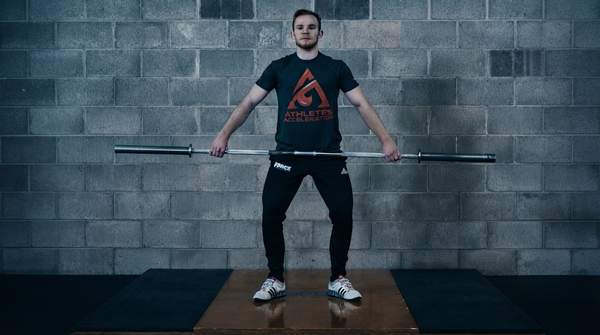
Four Pillars or PAP? Choosing an Advanced Warm-Up for Heavy Compound Lifts
For heavy compound lifting, two advanced warm-up philosophies dominate: the structured Four-Pillar Protocol for general readiness and Post-Activation Potentiation (PAP) for acute peak performance. This article breaks down both, compares them side by side, and helps you decide which fits your training goal or how to combine them.
Oct 27, 2026 · 4 min read
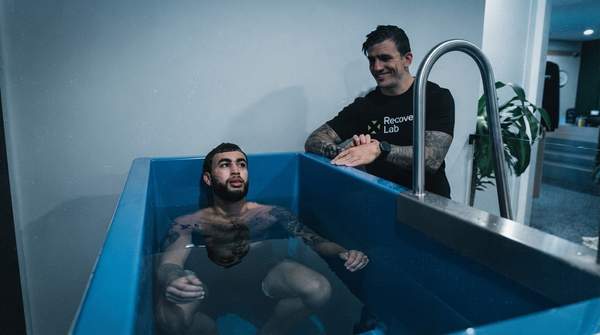
Cold Therapy for Lifters: Why the Ice Bath That Eases Soreness May Also Blunt Your Gains
Cold therapy effectively reduces post-exercise soreness, but the biological processes it suppresses are also crucial for long-term muscle growth. Advanced lifters face a trade-off: use ice baths for acute recovery needs, but limit routine use during hypertrophy-focused training blocks to avoid blunting adaptation signals.
Oct 26, 2026 · 5 min read

Active Recovery vs. Passive Rest: What the Science Actually Shows After Hard Training
While active recovery effectively clears blood lactate faster than passive rest, scientific evidence shows mixed results for improving next-session performance or reducing muscle soreness after high-intensity training. The choice between active recovery and passive rest should align with individual goals and how the body responds.
Oct 22, 2026 · 4 min read

Training for the Adaptation You Actually Want: A Specificity Framework for Strength, Size, and Endurance
The SAID principle emphasizes that your body adapts specifically to the demands placed upon it. This article details how to align training variables like load, repetitions, and exercise selection with specific goals such as maximal strength, muscle hypertrophy, and muscular endurance for optimal adaptation.
Oct 21, 2026 · 5 min read