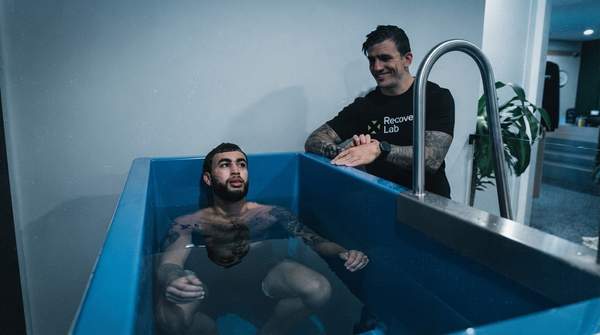
Cold therapy—cold-water immersion and whole-body cryotherapy—can genuinely reduce post-exercise muscle soreness, but the same biological processes it suppresses are the ones that drive long-term muscle growth. For advanced lifters, that creates a real trade-off: the evidence supports cold therapy as a tool for acute recovery when you need to perform again soon, and cautions against routine use during training blocks aimed at maximizing hypertrophy and strength. A 12-week trial comparing cold-water immersion with active recovery found that regular immersion attenuated long-term gains in both muscle mass and strength, which is why the question is not whether cold therapy works, but when it serves your goal.
Understanding Cold Therapy: Acute Recovery vs. Long-Term Gains
Intense resistance exercise produces microtrauma and small tears in the affected muscle fibers. That damage is not merely something to be minimized: as one review of post-exercise ice-water immersion explains, muscle damage stimulates muscle cell activity—including long-term hypertrophy—and helps repair and strengthen the muscle. The same microtrauma is also thought to underlie delayed onset muscle soreness, which typically presents 12 to 72 hours after exercise.
This is the crux of the trade-off. Cold therapy is proposed to work partly by damping the inflammatory and metabolic aftermath of hard training—the swelling, tissue breakdown, and soreness. Yet those processes overlap with the signaling that tells the muscle to adapt. Reviews of the molecular responses to resistance exercise report mounting evidence that regular cold-water immersion can diminish long-term gains in strength and muscle mass after strength training, and that post-exercise immersion can attenuate improvements in maximal strength, power, and skeletal muscle hypertrophy. Notably, this blunting appears specific to resistance-training adaptations; the same evidence indicates endurance adaptations are not negatively influenced.
The Science Behind the Chill: Three Physiological Mechanisms
Research on post-exercise cold exposure proposes three primary mechanisms, and each explains a different part of why an ice bath feels like it helps.
- Vascular effects. Immersion causes constriction of blood vessels, which has been suggested as a mechanism that helps flush waste products, such as lactic acid, out of the affected tissue.
- Metabolic effects. Cold reduces local metabolism, slowing physiological processes; this reduction is credited with limiting swelling and tissue breakdown in the exercised muscle.
- Neural effects. A systematic review of post-exercise cryotherapy describes a cold-induced nerve-conduction adaptation. Herrera and colleagues showed in 2010 that cold-water immersion changed sensory conduction at a physiological level sufficient to induce a hypoalgesic effect—meaning cold can dull pain at the nerve itself, not just at the damaged tissue.
Whole-body cryotherapy, which exposes the body to extreme temperatures of roughly −110°C to −140°C, is reported in a clinical review of cold acclimation therapy to accelerate muscle recovery by 30%–40% and reduce serum creatine kinase levels, a marker of muscle damage, while improving microcirculation. The same review notes that administering whole-body cryotherapy within one hour after exercise is more effective for restoring muscle strength than delayed cryotherapy.