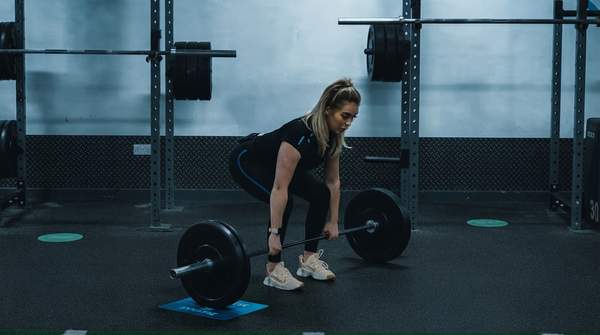
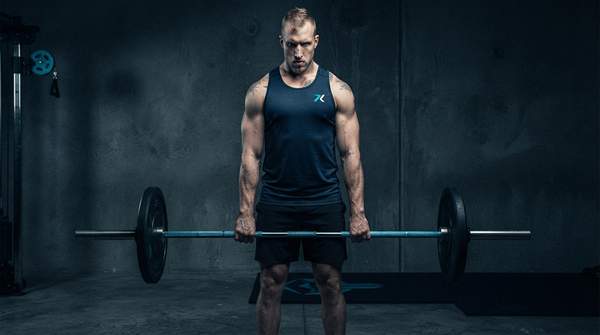
The conventional deadlift is a cornerstone exercise for developing overall strength and power, making precise biomechanics essential for advanced lifters. A deep understanding of the intricate joint movements and muscle activation patterns across each phase of the lift is crucial for refining technique, maximizing performance, and significantly reducing the risk of injury. Deviations from optimal form can lead to increased spinal loads and specific injury mechanisms, particularly in the lower back. By mastering the biomechanical nuances, lifters can enhance efficiency and safeguard their spinal health. Phase-by-Phase Kinematics: Joint Angles and Range of Motion
The conventional deadlift can be biomechanically analyzed through distinct phases, primarily the initial pull (Phase 1) and the movement from knee passing to lockout (Phase 2). Research, including a comprehensive biomechanical analysis comparing conventional and sumo deadlifts, highlights substantial differences in joint behavior between the conventional deadlift and other variations across all three anatomical planes. These differences underscore the importance of technique and experience in optimizing performance and reducing injury risk, as noted in a review published in the *Journal of Exercise Science & Fitness*.
During Phase 1, which encompasses the initial pull from the floor until the bar passes the knees, significant differences in kinematics are observed at the ankle and knee joints. This phase demands a specific interplay of joint angles to initiate the lift effectively. As the lift progresses into Phase 2, from the knees to the final lockout, the hip joint exhibits notable kinematic differences throughout both phases. The conventional deadlift involves greater hip flexion and ankle dorsiflexion. The emphasis is on the distinct movement patterns and ranges of motion that characterize each phase, particularly at the ankle, knee, and hip. Advanced lifters should focus on achieving these characteristic movement patterns to ensure efficient force transfer and minimize undue stress on joints.Muscle Activation Patterns Across the Lift
Muscle activation patterns are critical indicators of lifting efficiency and technique, revealing which muscles are primarily engaged at different points in the lift. Electromyographic (EMG) analysis, particularly from studies comparing conventional and sumo deadlifts, illuminates distinctive activation profiles for various muscle groups during the conventional deadlift.
During Phase 1 of the conventional deadlift, the Gluteus Maximus and Tibialis Anterior muscles show significantly greater activation. The Gluteus Maximus, a powerful hip extensor, is highly active between 0% and 19.5% of this phase, playing a crucial role in initiating the hip drive off the floor. Concurrently, the Tibialis Anterior, responsible for dorsiflexion of the foot, demonstrates greater activation between 48% and 62% of Phase 1, contributing to stability and proper foot positioning. As the lift transitions into Phase 2, after the bar passes the knees, the Gluteus Medius muscle exhibits significantly higher activation, particularly between 29% and 37% of this phase. The Gluteus Medius assists in hip abduction and external rotation, contributing to hip stability as the lifter approaches lockout. Understanding these precise muscle activation patterns allows advanced lifters to consciously engage the correct muscle groups at each stage, leading to more efficient force production and improved lifting mechanics.
Common Technical Deviations and Injury Risk
Despite the emphasis on proper form, several technical deviations are common during the conventional deadlift, especially under heavy loads. These errors can significantly increase mechanical stress on the spine and elevate the risk of injury.
One of the most prevalent and hazardous deviations is spinal flexion, commonly referred to as "rounding the back," particularly in the lower back region. This occurs when the lumbar spine loses its natural curvature and flexes under load. Another significant risk factor involves excessive extension or rotation of the spine while under load. These deviations can subject the lower back to substantial mechanical forces. For instance, heavy deadlifts can generate large compressive spinal loads ranging from 5 to 18 kilonewtons (kN) and shearing spinal loads between 1.3 and 3.2 kN, as reported in a narrative review on low back biomechanics during repetitive deadlifts. Such forces, when combined with improper spinal alignment, create a high-risk environment for injury. While studies specifically on lower back biomechanics during repetitive deadlifts are limited, findings from studies investigating other types of repetitive lifting suggest a high likelihood for adverse changes in lower back biomechanics that can increase the risk of injury. These deviations compromise the spine's ability to distribute load effectively, making it vulnerable to damage.
Specific Injury Mechanisms: Disc Herniation and Facet Joint Irritation
Understanding the specific mechanisms by which technical deviations lead to injury is vital for prevention. The spine's intricate structure, particularly the intervertebral discs and facet joints, is vulnerable to improper loading.
Heavy loading combined with spinal flexion, or rounding the back, can exert immense pressure on the intervertebral discs. This action can push the soft, gel-like disc material against nerves, potentially leading to disc herniations, which often require extended recovery periods. Conversely, excessive extension or rotation of the spine under load can irritate the small joints located at the back of the vertebrae, known as facet joints. This irritation can result in facet joint pain and inflammation. Repetitive hyperextension, particularly in younger athletes, can also cause stress fractures that lead to vertebral slippage, a condition known as spondylolisthesis. Both disc herniations and facet joint irritation are serious conditions that can significantly impair a lifter's ability to train and perform. The health resource Aim High Health emphasizes that exercises like deadlifts carry a higher back injury risk and necessitate excellent form, noting that "ego lifting"—lifting too much weight at the expense of form—causes more injuries than specific exercise selection. Prioritizing perfect form with lighter weights is crucial for building strength safely and effectively.
Evidence-Backed Corrective Principles for Technique Refinement
To mitigate injury risk and enhance performance, advanced lifters should adhere to several evidence-backed corrective principles, focusing on maintaining optimal spinal alignment and movement patterns. The paramount principle is to prioritize perfect form over the amount of weight lifted. If your form begins to break down, it is a clear indication that the weight is too heavy. Instead, focus on building strength safely and effectively with lighter weights and impeccable technique. This approach is fundamental for preventing injuries, particularly to the lower back.
Key corrective strategies include:
* Maintaining a Neutral Spine: Throughout all phases of the conventional deadlift, strive to keep your spine in a neutral position, avoiding both excessive flexion (rounding) and hyperextension. This involves setting up with a slight natural arch in the lower back and maintaining it. A neutral spine helps distribute spinal loads more evenly across the vertebral column, protecting the intervertebral discs and facet joints from undue stress.
* Controlled Movement: Execute the lift with deliberate and controlled movements, especially during the initial pull from the floor and the descent. Avoid jerking the weight or relying on momentum, which can compromise form and increase injury risk by introducing uncontrolled forces. A smooth, consistent bar path is indicative of good control.
* Proper Hip Hinge Mechanics: The conventional deadlift is primarily a hip-dominant movement. Focus on initiating the lift by hinging at the hips, driving them back during the descent to load the glutes and hamstrings, and driving them powerfully forward during the ascent. This engages the posterior chain effectively, reducing compensatory strain on the lower back.
* Core Bracing: Actively brace your core muscles before and throughout the lift. This involves taking a deep breath into your abdomen and tightening your abdominal muscles as if preparing for a punch. This action creates intra-abdominal pressure, which helps stabilize the spine and provides a rigid base for lifting heavy loads.
* Listening to Your Body: It is crucial to recognize warning signs. If you experience sharp pain during any movement, pain that radiates down the leg, numbness or tingling, a feeling of instability in the spine, or pain that worsens throughout the session, it is imperative to stop and rest. Inability to maintain proper form is also a clear signal to reduce the weight or cease the exercise.
Patience is essential when returning from a back injury. Aim High Health advises waiting until daily activities are pain-free, starting with bodyweight and resistance bands, and gradually progressing to light weights with perfect form. Rebuilding strength should occur gradually over weeks to months, avoiding the exercise that initially caused the injury and continuing any prescribed rehabilitation exercises. Prioritizing proper form and listening to your body are fundamental for long-term lifting success and injury prevention.