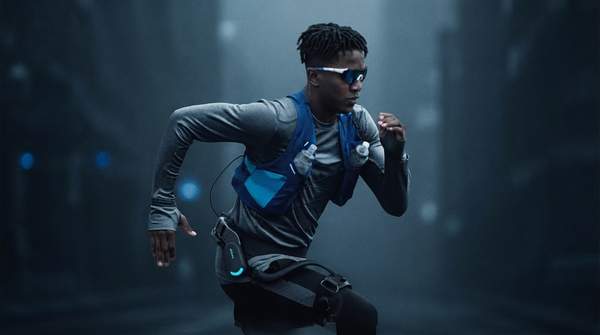
The global exoskeleton market is experiencing significant growth, largely fueled by the integration of artificial intelligence (AI) and human augmentation technologies. These advancements are transforming how exoskeletons function, particularly in sports and rehabilitation, by enhancing user control, synchronicity, and injury prevention. As these wearable robotic systems become more sophisticated, they offer personalized support and adaptive assistance, moving beyond traditional assistive devices to become intuitive extensions of the user.
This evolution is critical for improving mobility, performance, and safety across various applications, from aiding recovery to boosting athletic capabilities. The convergence of these technologies promises a future where exoskeletons are not just tools, but intelligent partners in human movement, offering tailored experiences that were previously unattainable.
Market Growth and Key Drivers: AI at the Forefront
The global exoskeleton market is poised for substantial expansion, with its size valued at USD 590.52 million in 2025. Projections from Data Bridge Market Research indicate a rise to USD 9,598.28 million by 2033, demonstrating a compound annual growth rate (CAGR) of 41.70% during this forecast period. This robust growth is primarily driven by the increasing prevalence of mobility impairments and workplace injuries, which heighten the demand for assistive wearable robotic systems.
A significant catalyst for this market momentum is the convergence of robotics, artificial intelligence, and human augmentation technologies. These integrations enable the development of more efficient and adaptive exoskeleton systems. Furthermore, growing investments from both governments and private organizations in enhancing worker safety and rehabilitation technologies are accelerating market penetration. Companies are also focusing on product innovation and strategic collaborations to broaden the functionality and application scope of these devices across multiple industries.
While the broader AI in Sports market, as reported by MarketsandMarkets, is projected to grow from USD 1.03 billion in 2024 to USD 2.61 billion by 2030 at a CAGR of 16.7%, the exoskeleton market's specific growth is driven by the direct application of AI within the wearable robotics domain. This focused integration allows for specialized advancements that cater to the unique demands of physical assistance and augmentation.
AI for Enhanced Control and User Synchronicity
Artificial intelligence plays a pivotal role in refining the control and user synchronicity of lower-limb exoskeletons, particularly in rehabilitation and sports applications. AI-based methodologies are central to interpreting a user's desired movements, allowing the exoskeleton to respond seamlessly and adaptively. This involves gathering comprehensive data from both the robotic system and multimodal patient monitoring, which is then processed by key modules.
One such module, known as Locomotion Control (LC), discerns high-level parameters related to walking, such as step-phase and terrain characteristics. Another, the Intention Detection (ID) module, focuses on identifying the user’s intention to initiate movement. The outputs from these modules feed into a trajectory generation system, which predicts the necessary joint angles for the exoskeleton to create a walking pattern customized to the individual’s anthropometric dimensions. Ultimately, this predictive information guides the Robot Control (RC) module, which controls the actuation system to execute and optimize the exoskeleton’s response, ensuring a tailored and adaptive experience for the user.
Researchers employ various machine learning techniques to implement these functional blocks. Reinforcement Learning (RL) is often favored in scenarios that necessitate adaptive learning and dynamic decision-making, while Neural Networks (NNs) are effective when dealing with high-dimensional sensor data and intricate control mappings. Additionally, Support Vector Machines (SVM) and Decision Trees (DT) have been utilized in the field of locomotion control and for identifying sub-phases of the gait cycle, further enhancing the precision and responsiveness of exoskeleton assistance.
Preventing Injuries with Intelligent Exoskeletons
AI's capabilities extend significantly into injury prevention within sports and rehabilitation settings. By enabling adaptive control and precise user intention detection, AI-powered exoskeletons can offer dynamic support that reduces the risk of common injuries. For instance, the Hippos Exoskeleton, launched in November 2024, introduced a knee brace with integrated airbag technology specifically designed to prevent ACL injuries during physical activities.
This solution enhances joint protection by providing dynamic support and reducing impact stress. It is engineered for use across sports, rehabilitation, and occupational settings, demonstrating how intelligent systems can minimize injury risks. The system achieves this by aligning the robot's configuration with desired movements and optimizing its response for a seamlessly tailored and adaptive experience, thereby preventing movements that could lead to injury.
Furthermore, AI algorithms can differentiate between human lower-limb motion and human-machine coordinated motion by dividing the gait cycle into sub-phases, such as double standing, leg swing, and leg stance. By fusing sensor information and using classification algorithms like the C4.5 decision tree, the system can accurately identify these sub-phases. This precise identification is crucial for providing appropriate, timely support and intervention, further contributing to injury prevention and enhanced safety during physical activities.
User Experience: Benefits and Practical Applications
The integration of AI into exoskeletons significantly enhances the user experience, offering practical benefits across sports and rehabilitation. These devices provide personalized rehabilitation therapies by leveraging AI for robot control and data analysis, facilitating personalized feedback and guidance. The adaptive nature of AI-powered exoskeletons means they can adjust assistance dynamically based on individual user needs, leading to more intuitive and safer interactions.
For individuals with lower-limb impairments, this translates to improved mobility and a more natural walking experience, as the exoskeleton becomes a more intuitive extension of their body. In sports, the benefits include enhanced performance through dynamic support, improved endurance, better posture, and increased efficiency without compromising operational performance, as exoskeletons support physical tasks and minimize strain. The reduced risk of injury, exemplified by innovations like the Hippos Exoskeleton knee brace, further contributes to user confidence and safety.
The noticeable surge in efforts to design novel tools and approaches that incorporate AI into rehabilitation for persons with lower-limb impairments underscores the growing recognition of these benefits. The overall result is a more intuitive, personalized, and safer interaction with exoskeletons, improving both functional outcomes and user confidence in diverse applications.
How AI Powers Adaptive Exoskeleton Control
This diagnostic framework illustrates how AI algorithms contribute to the adaptive control and enhanced user experience of sports exoskeletons, from sensing user intention to actuating movement and preventing injury.
| AI Algorithm Type | Exoskeleton Function | User Benefit |
|---|---|---|
| Reinforcement Learning (RL) | Adaptive learning and dynamic decision-making for control tasks | More responsive and personalized assistance, adapting to changing user needs |
| Neural Networks (NNs) | Processing high-dimensional sensor data and intricate control mappings | Accurate interpretation of complex user movements and environmental factors |
| Support Vector Machines (SVM), Decision Trees (DT) | Locomotion control, gait cycle identification, and sub-phase differentiation | Precise, tailored support throughout walking, improved stability and natural movement |
| AI algorithms (general) | User Intention Detection (ID) | Seamless and intuitive response to user's desired movements, enhancing synchronicity |
| AI algorithms (general) | Gait Cycle Identification (LC) | Appropriate and timely assistance during each phase of movement, optimizing support |
| AI algorithms (general) | Adaptive Control Strategies | Dynamic adjustment of assistance based on real-time user needs, improving overall performance |
| AI-powered systems (e.g., Hippos Exoskeleton) | Injury Prevention (e.g., ACL tear prevention via dynamic support) | Reduced risk of injury during physical activities and rehabilitation, increased safety |
| AI algorithms (general) | Personalized Feedback and Guidance | Tailored rehabilitation therapies and improved functional outcomes |
Navigating the Future of AI-Powered Sports Exoskeletons
The significant growth projected for the global exoskeleton market, driven by the convergence of AI and human augmentation technologies, underscores a clear path forward. Stakeholders should focus on continued research and development in AI integration for exoskeletons, prioritizing user-centered design and addressing challenges related to cost and long-term reliability to maximize adoption and benefit in sports and rehabilitation. The measurable indicator of success will be the increased availability of lightweight, affordable, and intuitively controlled AI-powered exoskeletons in sports and rehabilitation markets.