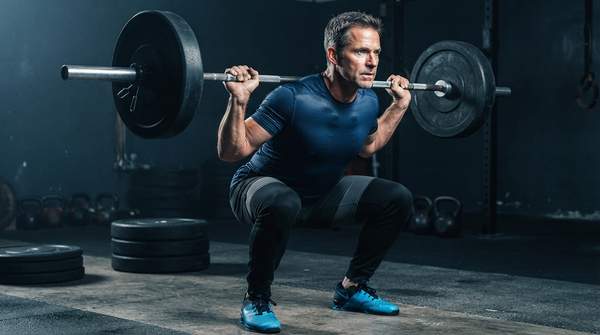
The most important evidence-supported change for a masters athlete is not training less—it is training differently. Three adjustments carry most of the weight: lift heavy enough to preserve fast-twitch muscle fibers, move dynamically to keep connective tissue pliable, and treat recovery as a programmed component of training rather than an afterthought. Done together, these protect both performance and joint health for the long term.
Introduction: Mastering Longevity in Sport
Aging changes the machinery, but it does not switch it off. Without active strength training, the average person loses 5–10% of muscle size between 25 and 50, another 15% between 50 and 65, and a further 25% after 65, according to figures cited by the Sport Information Resource Centre. The deeper concern is fiber type: with aging, we lose muscle mass and experience atrophy of the type II fibers responsible for strength and power if muscles are not used regularly, as exercise scientist Pete McCall explains.
The encouraging news is that this decline is negotiable. A study of lifelong strength versus endurance training in older men found that strength-trained master athletes showed muscle morphology similar to young men—something not seen in recreationally active or endurance-trained older groups. The likely mechanism, the researchers concluded, is chronic use of high contractile force generation. In other words, the stimulus you apply determines what you keep.
Strength Training: Building a Resilient Foundation
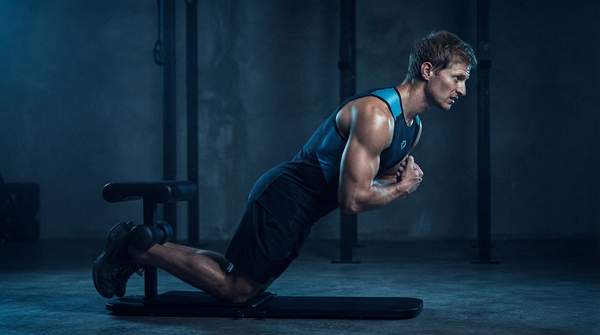
The American College of Sports Medicine recommends two strength training sessions per week for older adults, each including 8 to 10 exercises covering the major muscle groups. For masters athletes, that baseline serves a dual purpose: increasing muscle mass helps maintain technique and lets the body absorb repetitive impacts from running or jumping, which ultimately supports better performance.
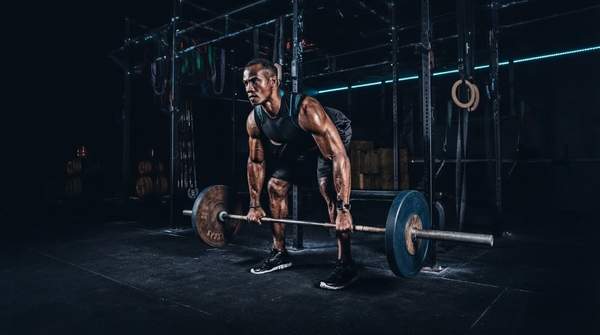
Intensity matters as much as frequency. The Wu Tsai Human Performance Alliance distinguishes "heavy" weights—loads you can only lift for 1 to 5 reps—from "moderate" weights in the 6-to-15-rep range, and notes that both approaches can increase fast-twitch fibers as long as fatigue sets in, exhausting slow-twitch fibers so fast-twitch units must take over. High-intensity work should be a goal to progress toward, not a starting point: McCall cautions that HIIT, for instance, is not a recommended entry point for many masters athletes. Build up gradually, and let progressive overload—not caution to the point of undertraining—drive adaptation.