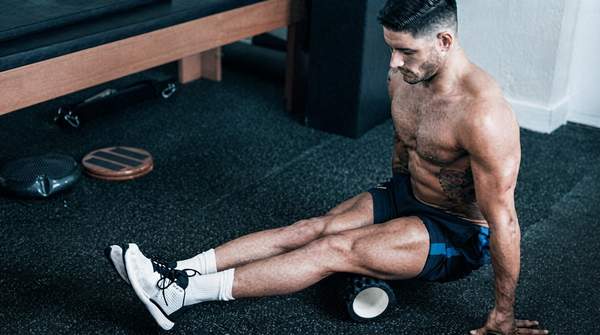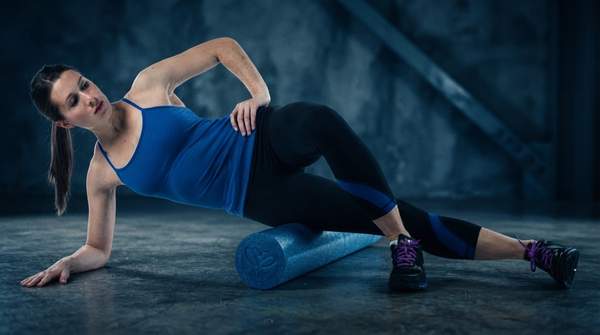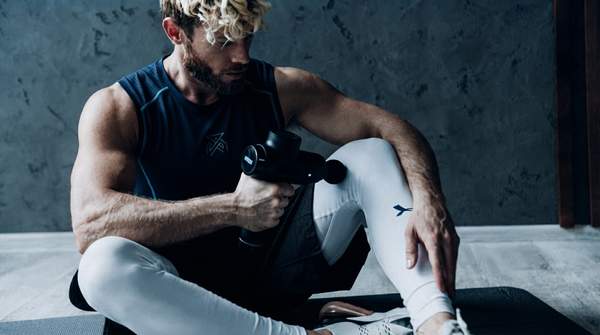
No single myofascial release tool does everything well, and the choice comes down to one question: do you need broad pressure across a large muscle group, or precise, deep pressure on a specific spot? Physical therapist Jeffrey Petersen draws the line the same way in his clinical guidance—foam rolling uses body weight to apply pressure across larger muscle groups and improve overall mobility, while massage guns deliver targeted, percussive therapy for localized, deep muscle tension. Add a massage ball for small, hard-to-reach areas, and you have the three-tool decision a lifter actually needs.
Choosing Your Myofascial Release Tool: A Lifter's Guide
Self-myofascial release tools all share a common goal—releasing fascial tension, breaking down adhesions, and reducing pain—but each applies mechanical force differently, as a scientific review of fascial-targeted interventions explains. Foam rollers are low-tech devices patients use themselves, as are massage balls; vibration massage guns sit at the higher-tech end of the same family. That shared purpose with different modes of application is exactly why tool selection matters. A lifter rolling quads before squatting has a different job than one hunting a stubborn knot under the shoulder blade, and the mechanism of each tool suits one job far better than the others.
Foam Rollers: Broad Pressure for General Recovery
The foam roller is the generalist. It works by using your body weight to apply sustained, broad pressure across large muscle groups—legs, back, hips—promoting myofascial release and improving overall mobility. Petersen positions it as the better choice when your goal is general recovery and flexibility rather than attacking a specific knot: it releases tight fascia across wide surfaces and covers large areas efficiently. HawkGrips' clinical selection guidance, authored by Molly Mook, frames it the same way—foam rollers fit when broad, self-applied soft-tissue work or movement preparation is the goal. For a lifter, that means pre-workout preparation or post-session recovery passes over the whole hamstring or quad, not pinpoint work.
Massage Guns: Targeted Percussion for Deep Knots
When the problem is a specific, stubborn knot rather than general tightness, percussion is the sharper instrument. A massage gun delivers rapid, repetitive mechanical stimulation—applying and releasing pressure quickly enough to penetrate deeper into the tissue than a roller can. Petersen recommends it specifically for deep, localized relief in hard-to-reach areas like the upper back, shoulders, and glutes, and for breaking up stubborn knots to speed recovery after intense workouts. He also notes the portability advantage: a compact gun travels better than a roller, making it practical for trigger-point work on the go. The trade-off is coverage—you would not reasonably work an entire quad with one.