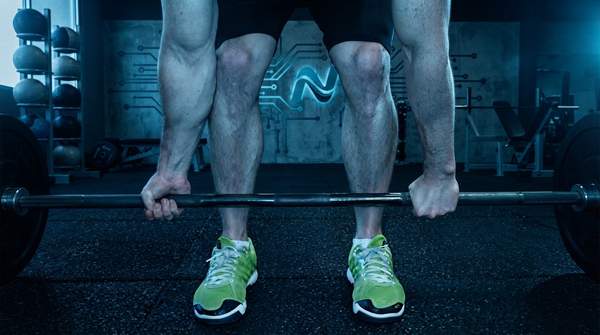
When a heavy deadlift slips from your grasp before you can lock it out, the frustrating conclusion is simple: your grip failed. However, the solution is more nuanced than just doing more deadlifts. The specific reason your grip gives out determines the most effective way to strengthen it. Your failure might stem from an inability to simply hold the bar for the duration of the set, or it could be a lack of strength to clamp your hands down hard enough in the first place. Without proper grip strength, an athlete cannot reach their true peak deadlift strength, according to an article by Burley Hawk for Westside Barbell.
Understanding this distinction is the key to targeted training that translates directly to a stronger pull. By diagnosing whether your weakness lies in passive support strength or active crushing strength, you can select specific assistance exercises to systematically eliminate this weak link. This guide compares three fundamental exercises, each targeting a different aspect of grip, to help you build the specific strength needed to hold onto your heaviest deadlifts and achieve new personal records.
Understanding Deadlift Grip Failure: Support vs. Crushing Strength
To fix a failing deadlift grip, you must first diagnose the type of strength that is lacking. The deadlift requires what Strength Ambassadors describes as a "crushing/support grip." This hybrid demand means you must first actively crush the bar by closing your hand around it with maximum force, and then maintain that hold with support strength and endurance, especially when performing multiple repetitions. A breakdown in either component leads to a failed lift.
Westside Barbell categorizes grip training into two functional types: active and passive. This framework helps clarify the two sides of the deadlift grip coin.
- Active or Crushing Grip involves actively squeezing an implement. This is the strength you use to clamp your hand shut around the bar, preventing it from ever feeling loose. If the barbell feels insecure from the moment you initiate the pull, or if you struggle to close your hands completely, your active crushing strength is likely the weak point.
- Passive or Support Grip involves simply holding onto an implement or barbell. This is the endurance-based strength that keeps your fingers wrapped around the bar during a long, grinding repetition or throughout a high-rep set. If your grip feels solid at the start but your hands begin to open involuntarily midway through the lift, your passive support grip is the limiting factor.
These principles apply to the common deadlift grip styles. The double overhand grip, where both palms face you, is the most natural but also the weakest, as it offers little resistance to the bar's tendency to roll out of your hands. The mixed grip, with one palm facing forward and one back, mechanically counters this roll, providing more security. However, both grips ultimately rely on a foundation of crushing and support strength to be effective at maximal loads.
Grip Exercise Comparison for Deadlift Performance
Choosing the right assistance exercise depends entirely on your specific point of failure. Some movements are designed to build the static endurance to simply hold on, while others develop the raw power to squeeze the bar into submission. The following exercises represent time-tested methods for building a comprehensive and powerful grip. Dead hangs and farmer's walks are excellent for building passive, supportive strength, while wrist curls directly target the muscles responsible for an active, crushing grip.
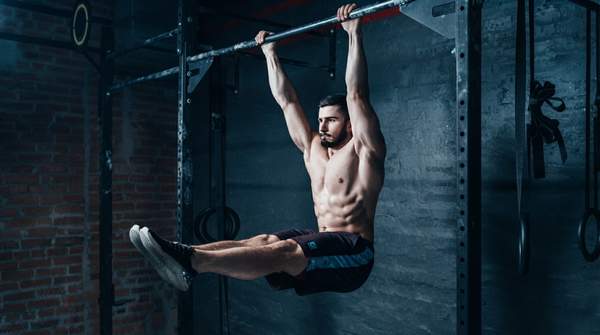
The dead hang is a foundational exercise for building passive support grip. By suspending your bodyweight from a pull-up bar, you force your hands, wrists, and forearms to sustain tension for an extended period. This directly mimics the demand of holding a heavy deadlift at the top or enduring a long set, training your ability to resist the force that pulls your fingers open. It is a pure test of static grip endurance.
Farmer's walks also build support grip, but they add a dynamic component. Carrying heavy dumbbells or implements over a distance challenges your grip to remain tight while your body is in motion. This enhances your capacity to hold heavy loads under less-than-perfectly-stable conditions, which has a direct carryover to controlling the barbell throughout the entire deadlift movement.
Wrist curls, performed with either a barbell or dumbbells, are a primary tool for developing active, crushing strength. This isolation movement directly targets the forearm flexors and extensors—the muscles responsible for closing your hand. By strengthening these muscles, you improve your ability to actively squeeze the barbell, creating a more secure and powerful grip from the very start of the lift.
| Exercise | Primary Grip Type Trained | Deadlift Carryover | Programming Notes |
|---|---|---|---|
| Dead Hangs | Primarily trains passive support grip, emphasizing endurance and the static strength to hold a heavy load. | Directly improves the ability to hold onto the barbell for extended periods, preventing your hands from opening during heavy sets. | Perform for time. Aim for 3-5 sets of 30-60 seconds, 2-3 times per week, typically at the end of a workout. |
| Farmer's Walks | Develops support grip strength and endurance under dynamic, loaded conditions, forcing you to maintain grip while in motion. | Enhances the overall capacity to hold heavy loads, which translates directly to improved grip endurance for deadlifts and other pulling movements. | Execute for distance or time. Perform multiple sets of 20-40 meters or 30-60 seconds, 1-2 times per week. |
| Wrist Curls (Pronated/Supinated) | Strengthens the active crushing grip by targeting the forearm flexor and extensor muscles responsible for closing the hand. | Improves the ability to actively squeeze and control the barbell, creating a more secure grip from the start of the pull. | Perform for 2-3 sets of 12-20 repetitions, twice a week, as recommended by Stronger by Science. This can be done with dumbbells or a barbell. |
Integrating Grip Training into Your Strength Program
Once you have identified the right exercises for your needs, integrating them effectively is crucial for progress without causing overtraining. According to Westside Barbell, grip training can be performed about twice per week, often scheduled on upper body training days. This frequency provides sufficient stimulus for adaptation without interfering with recovery for your primary lifts. For example, you could add wrist curls at the end of your max effort or dynamic effort upper body sessions to build crushing strength without fatiguing your grip for other exercises.
It is essential to view these exercises as supplements to, not replacements for, your main strength work. In an article for Stronger by Science, Cameron Gill emphasizes that while exercises like farmer's walks and holds are proven methods for improving deadlift grip, they should be used to complement sport-specific grip training rather than replace it. The most specific grip training for the deadlift is deadlifting itself. The goal of these assistance exercises is to build the underlying muscular capacity that allows your grip to keep pace with the increasing strength of your back and legs.
Progressive overload is just as important for grip training as it is for any other lift. For time-based exercises like dead hangs and farmer's walks, strive to gradually increase the duration or distance. For repetition-based movements like wrist curls, focus on increasing the weight or completing more reps within your target range. This ensures you are continuously challenging your muscles to adapt and grow stronger. By strategically adding this targeted work, you can build long-term grip strength and forearm muscle in a way that is less systemically fatiguing than simply performing more deadlifts.
Selecting Your Grip Training Strategy
The most effective path to a stronger deadlift grip begins with an accurate diagnosis of your weakness. Lifters should select grip assistance exercises based on diagnosing whether their deadlift grip failure is due to insufficient support grip (holding the bar) or active crushing strength (closing the hand). If your hands feel weak from the moment you grip the bar and you struggle to establish a secure hold, focus on active strength builders like wrist curls. If your grip is solid initially but fades during the set, causing your fingers to uncurl, prioritize passive support exercises like dead hangs and farmer's walks.
By aligning your chosen exercise with your specific point of failure, you can turn a frustrating weakness into a reliable strength. The ultimate goal is a grip that is no longer the limiting factor in your heaviest pulls, allowing you to fully express the strength you've built in your posterior chain. Progress is clear and direct: the primary indicator of success will be an improved ability to maintain grip on the barbell for the desired number of repetitions or duration during deadlifts and grip-specific exercises.
Sources
- How to Improve Deadlift Grip Strength — Westside Barbell
- How to Improve Deadlift Grip Strength — Strength Ambassadors
- The Evidence-Based Guide to Grip Strength Training & Forearm Muscle Development — Stronger by Science