
All Stories

Still Losing Your Towel? How the Aiming Fluid Golf Magna-Anchor™ Ends That Frustration for Good
Discover how the Aiming Fluid Golf Magna-Anchor™ system solves the common frustration of losing golf towels, offering a superior magnetic design and a comprehensive club cleaning routine. This innovative towel ensures your cleaning tool stays attached, cleans effectively, and supports your game.

Match Your Electrolyte Powder to Your Workout: A Sodium-and-Sugar Decision Framework
Choosing the right electrolyte powder depends on your workout's duration, intensity, and conditions. This guide helps you match sodium and carbohydrate profiles to your specific training needs for optimal hydration and performance.

Train to Failure or Leave Reps in Reserve? Match Your RIR to Your Goal
Training to failure isn't always optimal; the best approach depends on your goal. For muscle growth, training close to failure (1-3 RIR) offers a modest benefit, while for strength, leaving 3-5 reps in reserve is equally effective and better for recovery.

Which Squat Variation Fixes Your Weak Point? A Biomechanical Guide for Experienced Lifters
Diagnose your specific squat weak points, like upper back rounding or core instability, by analyzing failure patterns. Then, choose the right barbell variation—Front, Zercher, or Back Squat—to biomechanically target and strengthen that limiter.

Why Building Muscle Makes You More Insulin-Sensitive—and How to Use That for Hypertrophy
Insulin sensitivity and muscle growth are interconnected goals that reinforce each other. Building skeletal muscle increases your capacity to clear glucose from the blood, while improved insulin sensitivity fosters a more anabolic environment for muscle growth.

How UIAR Helps College Coaches Review Student-Athletes With Better Context
UIAR gives college coaches and student-athletes a recruiting environment built around fuller context. The platform helps athletes create verified profiles, organize athletic and academic information, and connect with coaches.

Training for the Adaptation You Actually Want: A Specificity Framework for Strength, Size, and Endurance
The SAID principle emphasizes that your body adapts specifically to the demands placed upon it. This article details how to align training variables like load, repetitions, and exercise selection with specific goals such as maximal strength, muscle hypertrophy, and muscular endurance for optimal adaptation.

How to Time Your Post-Exercise Carbs: A Recovery-Window Decision Framework
Post-exercise carbohydrate timing is critical when your next training session is less than 24 hours away, requiring immediate intake of 1.0–1.2 grams per kilogram of body weight per hour. For recovery windows longer than 24 hours, focusing on total daily carbohydrate needs is sufficient.

Mind-Muscle Connection vs. Movement Focus: Which Attentional Strategy Fits Your Lift
Choosing between mind-muscle connection (internal focus) and movement focus (external focus) depends on your training goals. Internal focus enhances muscle activation for hypertrophy, while external focus improves economy and performance for strength and power.

Reading HRV and GSR Together: How Biofeedback Signals Reveal an Athlete's Recovery State
Combining Heart Rate Variability (HRV) and Galvanic Skin Response (GSR) biofeedback offers athletes a powerful way to understand their autonomic nervous system state. Understanding these combined patterns helps athletes determine whether their body is primed for training or requires recovery, enabling more informed training decisions.

Pillowsonic Symphony Review 2026: Is This Under-Pillow Speaker Worth $69.99?
The Pillowsonic Symphony is a specialized under-pillow speaker designed to provide a private, therapeutic, and comfortable bedtime audio experience without the discomfort of headphones or earbuds. This review examines if its $69.99 price is justified by features like a built-in digital player and dual connectivity.
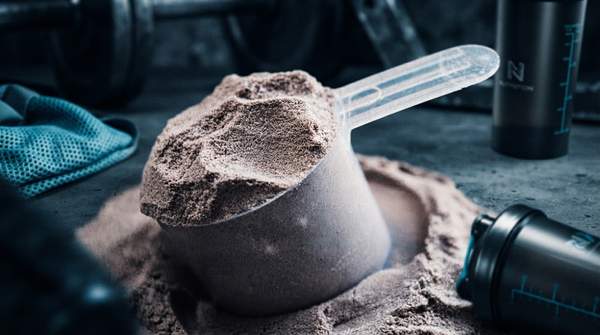
Five Evidence-Backed Pre-Workout Ingredients for Strength and Power: Doses, Mechanisms, and How to Stack Them
This guide details five evidence-backed pre-workout ingredients for strength and power, explaining their unique mechanisms, optimal doses, and timing strategies. It also teaches how to evaluate supplement labels to avoid under-dosed products and proprietary blends.

Active Recovery vs. Passive Rest: What the Science Actually Shows After Hard Training
While active recovery effectively clears blood lactate faster than passive rest, scientific evidence shows mixed results for improving next-session performance or reducing muscle soreness after high-intensity training. The choice between active recovery and passive rest should align with individual goals and how the body responds.

Stretching for Lifters: Timing Is Everything for Strength and Flexibility
Lifters should use dynamic stretching before workouts to prepare the body for movement and reserve static or PNF stretching for post-workout cool-downs or dedicated mobility days. This timing ensures flexibility gains without compromising strength performance.

Beyond Muscle: Why Strength Arrives Before Size—and What Your Nerves, Tendons and Bones Are Doing About It
Initial strength gains from resistance training are primarily driven by neural and connective tissue adaptations, not muscle growth. Understanding the distinct timelines for these physiological changes is key to optimizing training for long-term resilience and strength.

5 Ways LigaBJJ Makes BJJ Tournaments Easier for Central American Competitors
For many Brazilian Jiu-Jitsu practitioners in Central America, gaining high-level tournament experience has historically meant facing significant logistical and financial hurdles. The journey to compete often involved ex…

What to Eat Before a Workout: A Goal-and-Timing Decision Framework
The optimal pre-workout meal is determined by your primary training goal and the time available before exercise, balancing macronutrients like carbohydrates and protein. This guide provides a decision framework to help you choose the right fuel for muscle growth or general performance.

Training Past 40: How Masters Athletes Keep Strength High and Joints Healthy
Masters athletes over 40 can maintain high strength and joint health by training differently, focusing on heavy strength work, dynamic mobility, and strategic recovery. These adjustments help preserve muscle fibers, keep connective tissues pliable, and optimize adaptation for sustainable performance.

Resistance Training Really Does Change Your Muscle Fiber Types — Just Not the Way You Might Hope
Resistance training primarily shifts fast-twitch muscle fibers from the highly fatigable Type IIx to the more fatigue-resistant Type IIa. While this enhances work capacity, large-scale conversion of slow-twitch Type I fibers to fast-twitch types is not reliably achieved through training.

Eccentric Training for Injury Prevention: How to Use AEL, Nordic Curls, and Tempo Work to Build Resilient Tissue
Eccentric training, emphasizing the muscle-lengthening phase under load, is a highly effective strategy for injury prevention and building resilient tissues. This article details practical methods like Accentuated Eccentric Loading (AEL), Nordic Hamstring Curls, and standard tempo eccentrics, explaining their scientific basis and application.

5 Practical Ways Trael Hydration Helps Athletes Recover Faster Without Synthetic Additives
For dedicated athletes, recovery is not just a phase; it's a critical component of performance. The market is flooded with sports drinks promising rapid replenishment, but many rely on synthetic additives, artificial dye…

Diagnose Your Sticking Points: A Weak-Point Framework for Squat, Bench, and Deadlift Accessories
Advanced lifters can diagnose sticking points in the squat, bench press, and deadlift by observing where the bar slows during maximal attempts. This guide maps common sticking points to specific muscular weaknesses and recommends targeted accessory exercises to address them.

How to Read Your Wearable Data Before a Heavy Lifting Session: A 3-Tier Decision Framework
Advanced lifters should use multi-day trends in HRV and sleep, combined with subjective feelings, to guide heavy lifting session intensity. A 3-tier decision framework helps determine whether to proceed, modify, or prioritize recovery, while treating in-workout device metrics with skepticism.

Four Mobility Drills That Fix Your Overhead Position: A Diagnostic Routine for Advanced Lifters
This article offers a diagnostic routine and four mobility drills to address common overhead position limitations in advanced lifters, focusing on thoracic extension, scapular control, and lat flexibility. Identify your specific weak link to improve overhead performance and reduce injury risk.