The kettlebell swing, clean, and snatch look similar from the outside—all are explosive, hip-driven ballistics built on the same hinge—but they project force in different directions and develop different athletic qualities. The swing is your tool for horizontal power, the quality that carries over to sprinting. The snatch takes the same hip drive and redirects it vertically through a longer arc, maximizing total work. The clean sits between them: a foundational transition that builds strength, efficient weight transfer, and stability. Here is how to tell them apart and pick the right one.
The Kettlebell Swing: Mastering Horizontal Power
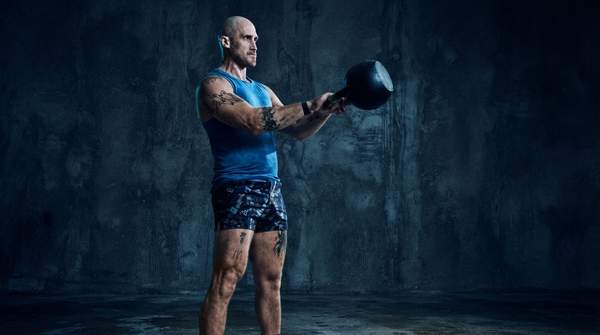
The swing is, in the words of StrongFirst instructor John Odden, "a horizontal hip hinge translation." You hike the bell back between your legs, then snap the hips forward, projecting the bell out in front of you to roughly chest height. Nothing travels overhead; the bell traces a repeating arc out and back while your hips do the throwing.
That horizontal emphasis is what makes the swing unique among power exercises. A research review of kettlebell training notes that a swing with light loads generates power results comparable to heavier jump squats, with a larger ratio of propulsive force directed horizontally rather than vertically than barbell jump squatting produces. That is a meaningful finding for athletes: most sprinting and acceleration demand force projected straight ahead, which is exactly the direction the swing trains.
Odden also points to research suggesting the swing correlates strongly with maximal and explosive power, particularly when the quick application of force is the goal. Both the swing and the snatch share one signature quality: rapid cycling between muscle contraction and relaxation, hammering the posterior chain. If your sport rewards getting from A to B faster, the swing is your ballistic.